Onni District Heating is Generated from Renewable Energy Sources
28.06.2022
District heating produced from renewable energy sources is an act of circular economy. Oulun Energia’s heating solution is generated using renewable or comparable energy forms.
We can demonstrate the renewability of Onni district heating through the Energy Authority’s Guarantee of Origin system.
In producing renewable district heating, Oulun Energia utilises surplus heat and biomass. The biomass used for Onni’s production mainly consists of energy wood, which is forest chips harvested from young thinning forests during forestry work, as well as by-products from sawmills.
Biomass renews quickly and does not release more carbon dioxide into the atmosphere than the natural carbon cycle. The faster the fuel renews, the faster the released carbon is reabsorbed into trees and soil.
The speed of this cycle and what the alternative emission scenario would be, for example regarding logging residues, determine whether the fuel is classified as a renewable energy source. The definitions are based on EU legislation.
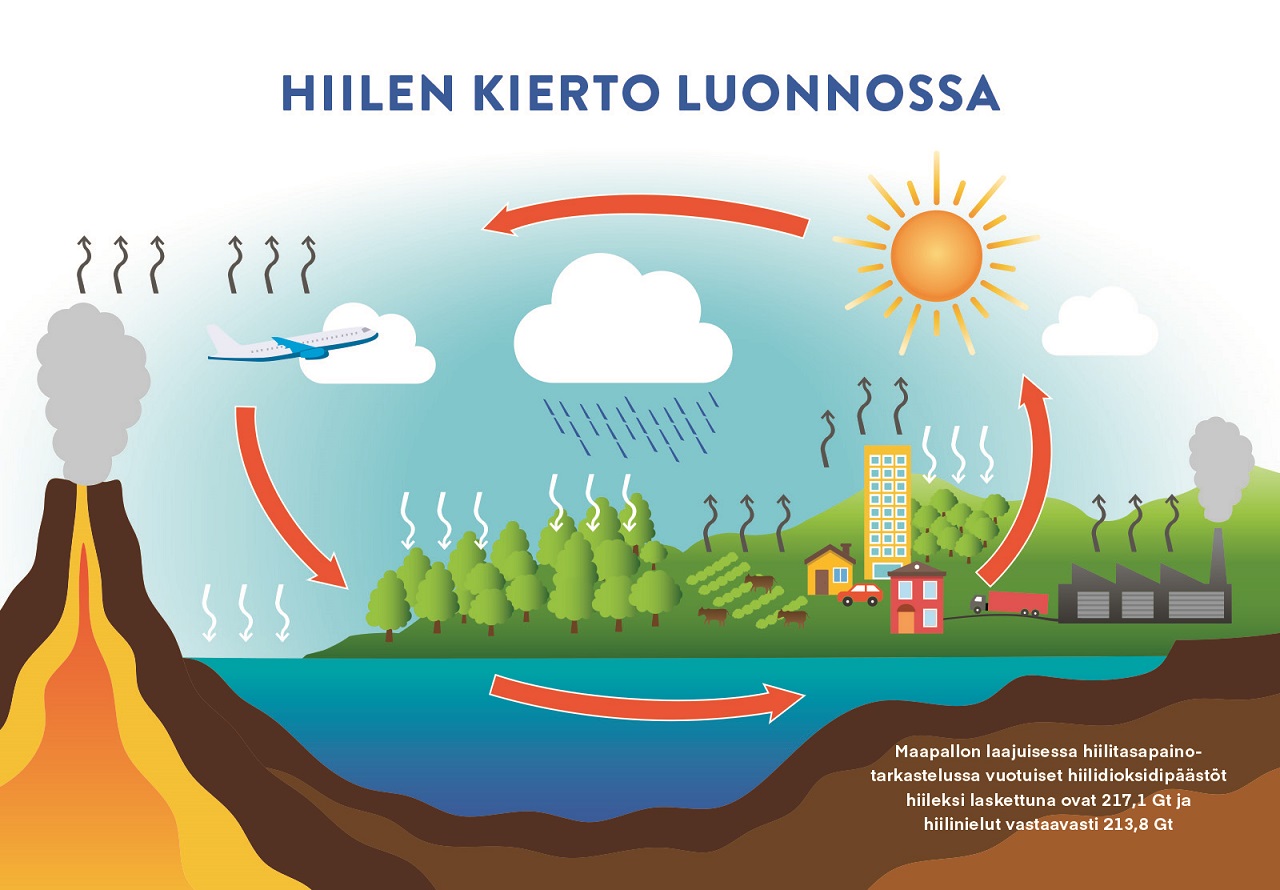 Photo: Olli Pekka Siira's study (2019)
In a carbon neutral process, circular economy side streams, such as non-recyclable waste, that are comparable to renewable energy sources can be converted into energy in power plants.
Recovering Surplus Heat
District heating is generated in CHP production, i.e., combined heat and power generation. For example, at the Laanila bio-power plant, the steam driving the electricity-producing turbine is condensed into district heating water. By recovering condensation heat, the efficiency of energy sources can be doubled compared to producing electricity alone.
Oulun Energia also recovers renewable district heating from surplus heat sources generated by cooling, such as refrigeration systems in supermarkets. Through cooperation between industry and energy production, surplus energy used for cooling is utilised as efficiently as possible. Surplus heat recovery plays an important role in renewable district heating production now and in the future, says Heating Services Director Kimmo Alatulkkila.
“We want to actively but responsibly reduce combustion-based methods of producing heat. Responsibility is a megatrend that energy companies must take into account in their product range,” Alatulkkila explains.
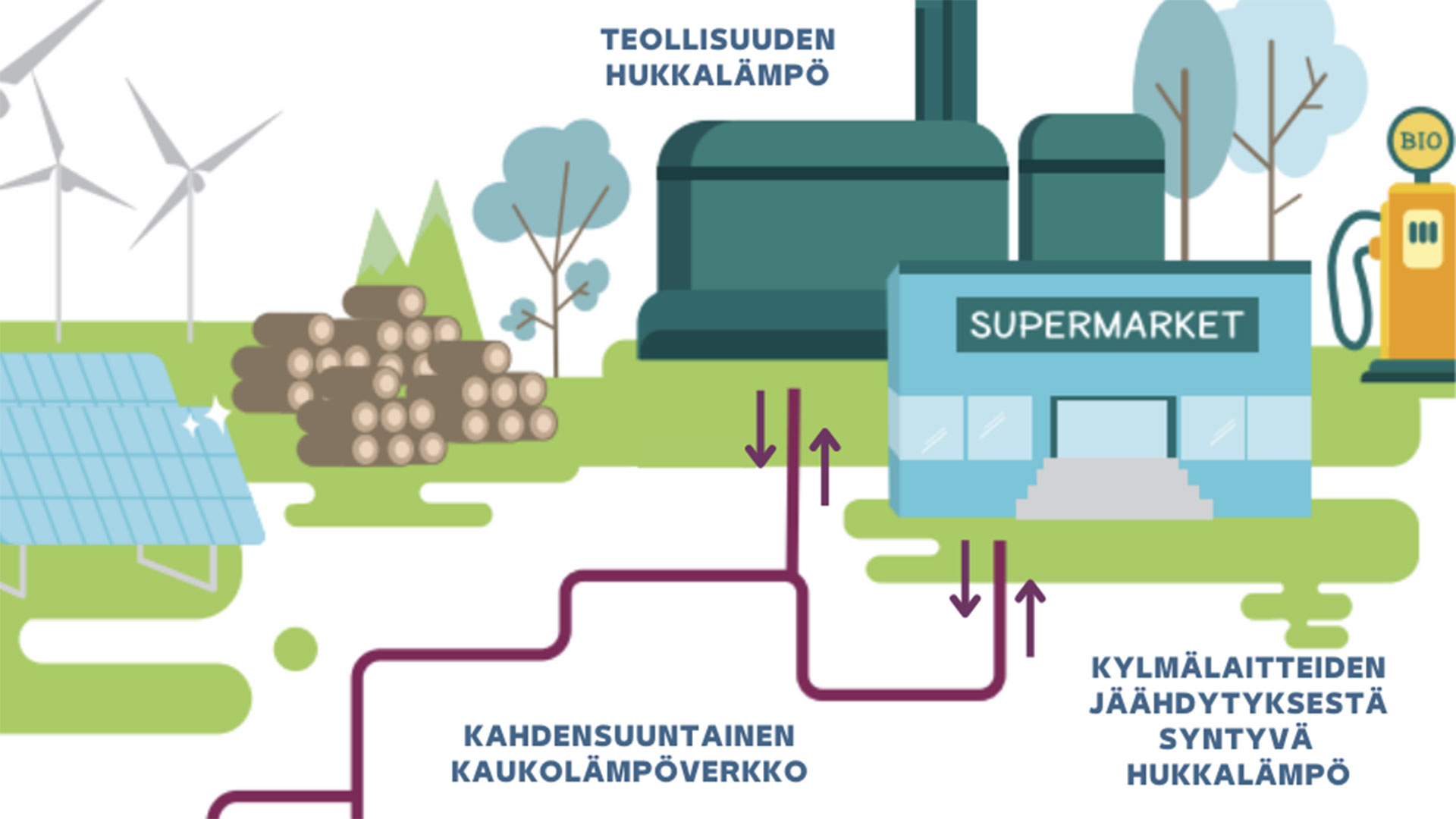
The photo was originally published in Oulun Energia’s customer magazine 3/2021. Illustrations by Erika Neitola.
Moving Away from Fossil Fuels – Replacing with Renewables
The amount of fossil fuels used by Oulun Energia has decreased significantly in recent years. We are phasing out peat in a controlled manner, which has the greatest impact on reducing our carbon footprint. The share of renewable energy in our energy production has steadily increased.
District heating production also uses SRF recycled fuel. SRF is produced at the Syklon sorting plant from commercial, industrial, and construction waste. It mainly contains wood, fibres, and plastics unsuitable for other material recovery.
Thanks to the new boiler technology at the Laanila bio-power plant, opened in 2020, we have been able to produce energy entirely from renewable fuels, says Production Director Mikko Vesterinen.
“We replace peat mainly with wood fuel and SRF recycled fuel. We also recover as much energy as possible from flue gases into the district heating network,” Vesterinen states.
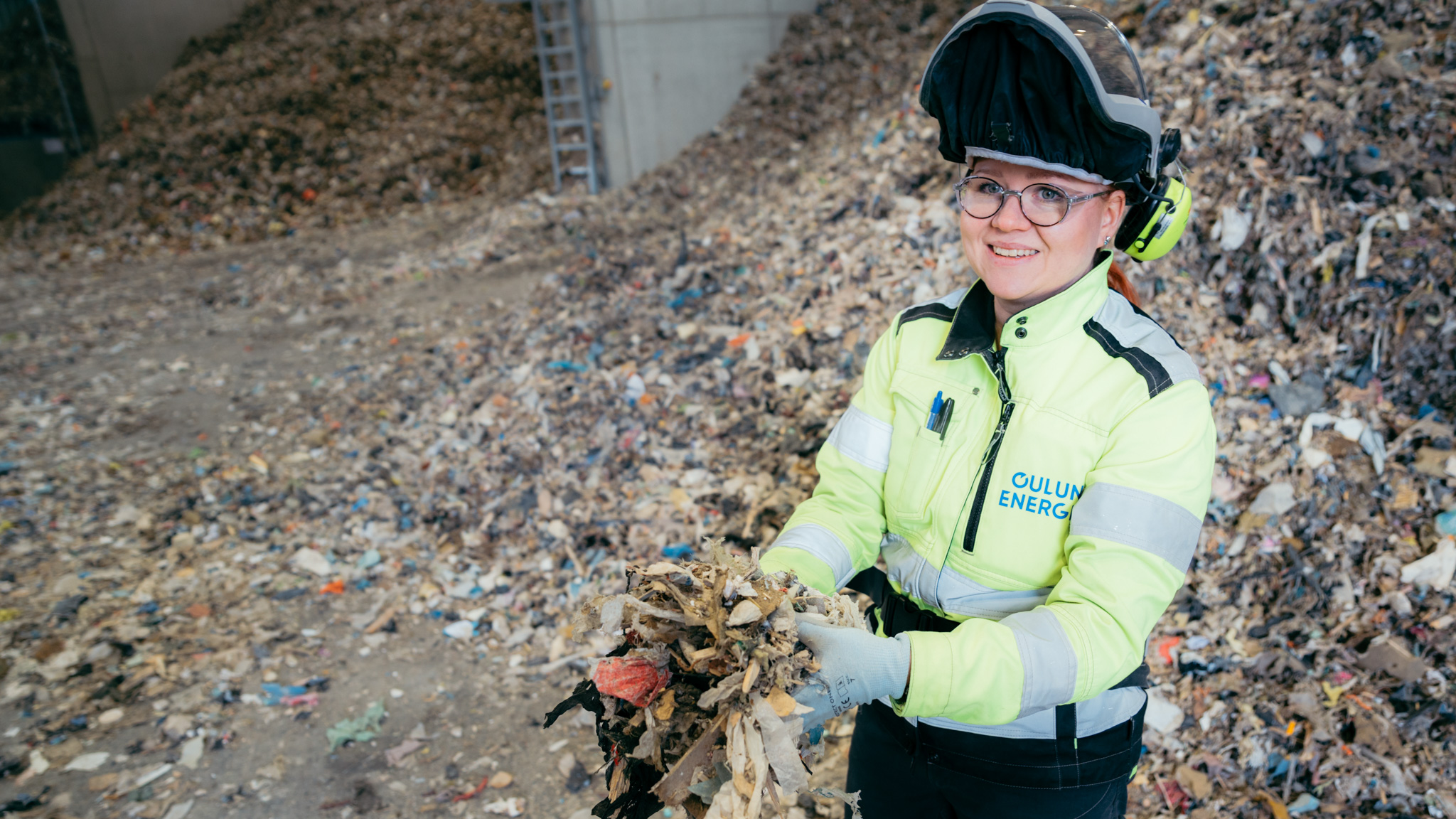 Solid recovered fuel (SRF) at Oulun Energia’s circular economy company Syklo’s waste sorting plant.
Actions for the future
In 2021, Oulun Energia produced over 1,000 gigawatt-hours of renewable district heating. Public sector actors, in particular, are interested in renewable heating solutions as part of their own targets.
Offering renewable district heating to both corporate and private customers is one step towards Oulun Energia’s net-zero target by 2040, says Kimmo Alatulkkila.
“We want to take responsible actions on behalf of our customers. They are increasingly aware of where their heat energy comes from. With renewable district heating, it is easy to make a more environmentally friendly choice. We ensure that the system can provide energy suitable for customers’ needs,” Alatulkkila concludes.
Read more aboutrenewable district heating as an additional service